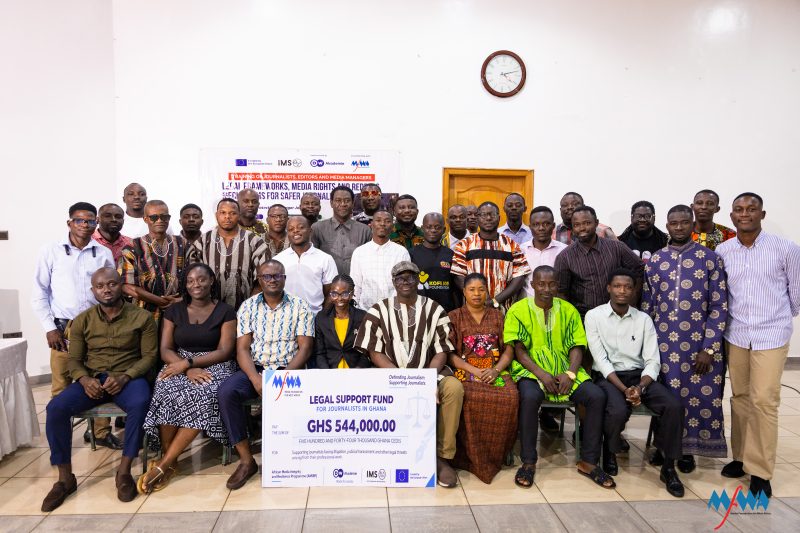
The Media Foundation for West Africa (MFWA) has secured GH¢544,000 to support legal assistance for media practitioners in Ghana facing legal challenges in the course of their work.
The support is being provided under the project the African Media Integrity and Resilience Programme (AMIRP).
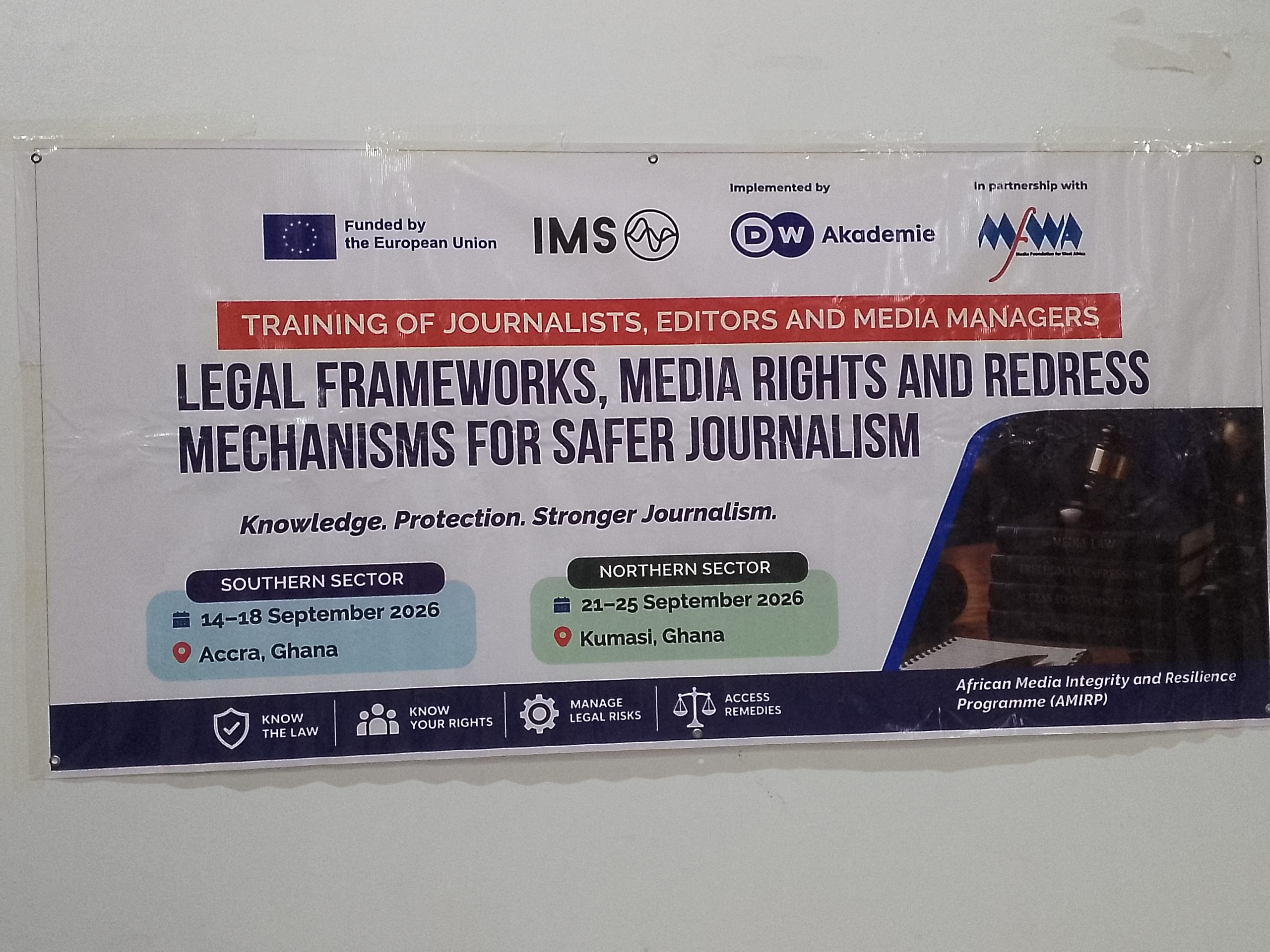
The project is implemented by the MFWA with support from International Media Support (IMS) and DW Akademie, and funded by the European Union (EU).
The disclosure was made during a training programme for journalists from the Northern sector held at the Miklin Hotel in Kumasi on September 21, 2025 on Legal Framework, Media Rights and Redress Mechanisms for Safe Journalism
The project seeks to strengthen the legal protection of journalists in Ghana by improving their knowledge of media laws and increasing their access to legal assistance.
Its objectives include equipping journalists with the knowledge and practical skills to understand, prevent and manage legal risks, while increasing awareness of legal protection mechanisms and the Legal Support Fund.
The project is also expected to improve journalists’ capacity to manage legal risks and operationalise the Legal Support Fund, while strengthening collaboration among journalists, legal practitioners and media support organisations.
Speaking at the training, journalist and lawyer Sampson Lardy Ayinene said journalists are increasingly facing lawsuits as a result of their professional work.
He noted that legal action, within the framework of the law, was preferable to physical attacks on journalists.
Mr Ayinene said individuals or institutions who disagreed with media reports had lawful avenues available to them, including rejoinders and legal redress, because Ghana operates under a democratic system.
He described the intervention by the MFWA and its partners as timely, particularly in view of the increasing legal challenges confronting journalists and media organisations.
The lawyer also raised concerns about the increasing use of Strategic Lawsuits Against Public Participation (SLAPPs) as a form intimidation against journalists and media organisations.
Which he described a new form of technique to shut media as a result the financial constraints faced by many media houses and individual journalists could make it difficult for them to defend themselves in court, even when they had acted within the law.
According to him, the Legal Support Fund would provide journalists with greater access to legal assistance and enable them to carry out their professional duties with greater confidence.
He stressed that where journalists make errors, appropriate legal and professional mechanisms should be used to address such errors, rather than using litigation to intimidate or silence journalists.
Mr Daniel Kwame Ampofo Agye, Programme Manager for Media for Democracy and Good Governance, said the media provided an important platform through which citizens could express their opinions and participate in democratic governance.
He said for the media to effectively perform this role, media organisations and journalists must be resilient, particularly in the face of legal and financial challenges.
Mr Agye noted that many media houses lacked the financial resources to pursue or defend legal cases in court, even when they believed they had acted properly.
He said the project would therefore provide training for journalists while also supporting legal cases through the Legal Support Fund.
He explained that the training had been divided into two zones the Northern Zone and Southern Zone to facilitate effective engagement and training of journalists across the country.
Review of media training curriculum
Mr Agye also disclosed that the MFWA was reviewing the media training curriculum used by media training institutions in Ghana to ensure that it responds to contemporary developments and practices in journalism.
He said proposals from the curriculum review would be subjected to further assessment and recommendations before implementation.
The initiative forms part of efforts by the MFWA and its partners to strengthen the resilience of Ghana’s media, improve journalists’ understanding of the legal environment within which they operate, and enhance access to legal protection and redress mechanisms.
source: yagbonradioonline