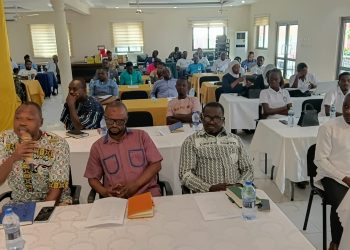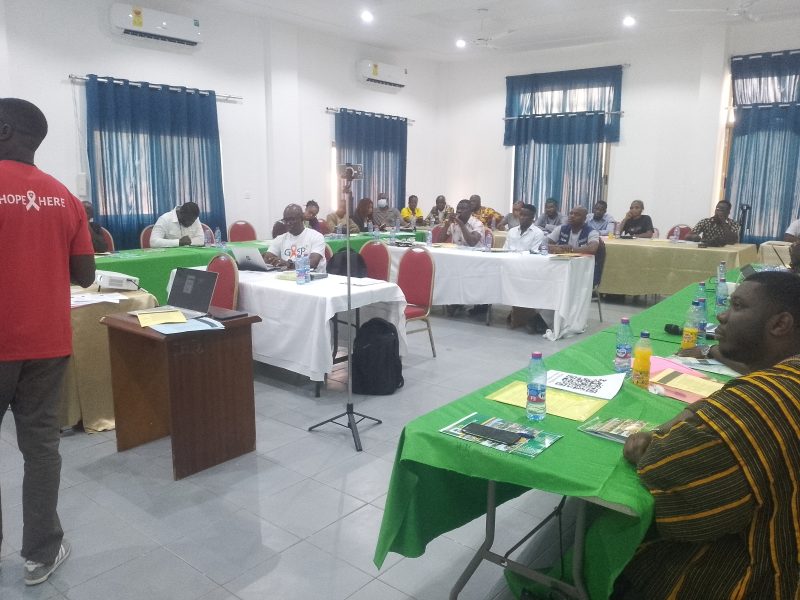
The World Health Organisation (WHO), in collaboration with the Association for Suicide Prevention Ghana (GASP), has organised a training workshop in Tamale to equip media practitioners with skills for responsible suicide reporting.
The workshop, brought together journalists from the five northern regions.
Participants were taken through WHO-recommended guidelines on suicide reporting, mental health awareness, stigma reduction and the unique cultural context of suicide in Ghana.
The training, held on January 30, 2026, at the UDS Guest House on the Tamale Campus of the University for Development Studies, was organised by the Self-harm and Suicide Prevention Research Lab of the Department of Psychology, University of Ghana, in collaboration with the Association for Suicide Prevention in Ghana (GASP), with support from the World Health Organization (WHO) Ghana Office.
The workshop focused on the application of two nationally approved tools — the Ghana Guidelines for Appropriate Media Reporting of Suicide (GGAMRS) and the Ghana Suicide Reporting Scorecard (GSRS).
These tools are designed to help reduce sensationalism in suicide coverage and prevent imitative or copycat suicides, particularly among vulnerable populations.
Speaking at the programme, the President of GASP and Project Lead, Prof. E. Nii-Boye Quarshie, highlighted the critical role the media plays in suicide prevention.
He traced the history of suicide prevention advocacy in Ghana, noting years of research, stakeholder engagement, and sustained advocacy that ultimately led to the decriminalisation of attempted suicide.
Prof. Quarshie explained that irresponsible reporting can worsen stigma, retraumatise bereaved families, and increase suicide risk, whereas ethical and sensitive reporting can help save lives.
He emphasised that suicide should be treated as a public health issue that requires empathy, accurate information, and collaboration across sectors, including the media.
He further noted that GASP, established in 2017 and grounded in research at the University of Ghana, works closely with key stakeholders — including the police, judiciary, traditional leaders, health professionals, religious leaders, and media practitioners — to transform negative attitudes and improve responses to suicidal behaviour.
Participants were advised to avoid graphic details, sensational headlines, and unnecessary identification of victims.
Instead, they were encouraged to include help-seeking information, mental health resources, and messages of hope in suicide-related reports.
The organisers expressed confidence that the training would strengthen ethical journalism practices in northern Ghana and contribute meaningfully to the country’s broader suicide prevention efforts.